 Chess
ChessGuide
How Chess.com detects cheating
Chess.com closes thousands of accounts for fair-play violations every day, and it does it without ever looking at your screen. Understanding how that works is the single most useful piece of knowledge for anyone thinking about assistance, because every ban starts with the same handful of signals.
The short version
Chess.com's fair-play system is statistical. It compares your games against models of how humans actually play at every rating level, built from billions of games. When your play fits the human model, nothing happens. When it fits the engine model better, your account gets reviewed. The exact internals are secret, but the categories of evidence are well established from years of bans, public statements and closed accounts.
Signal 1: accuracy that outruns your rating
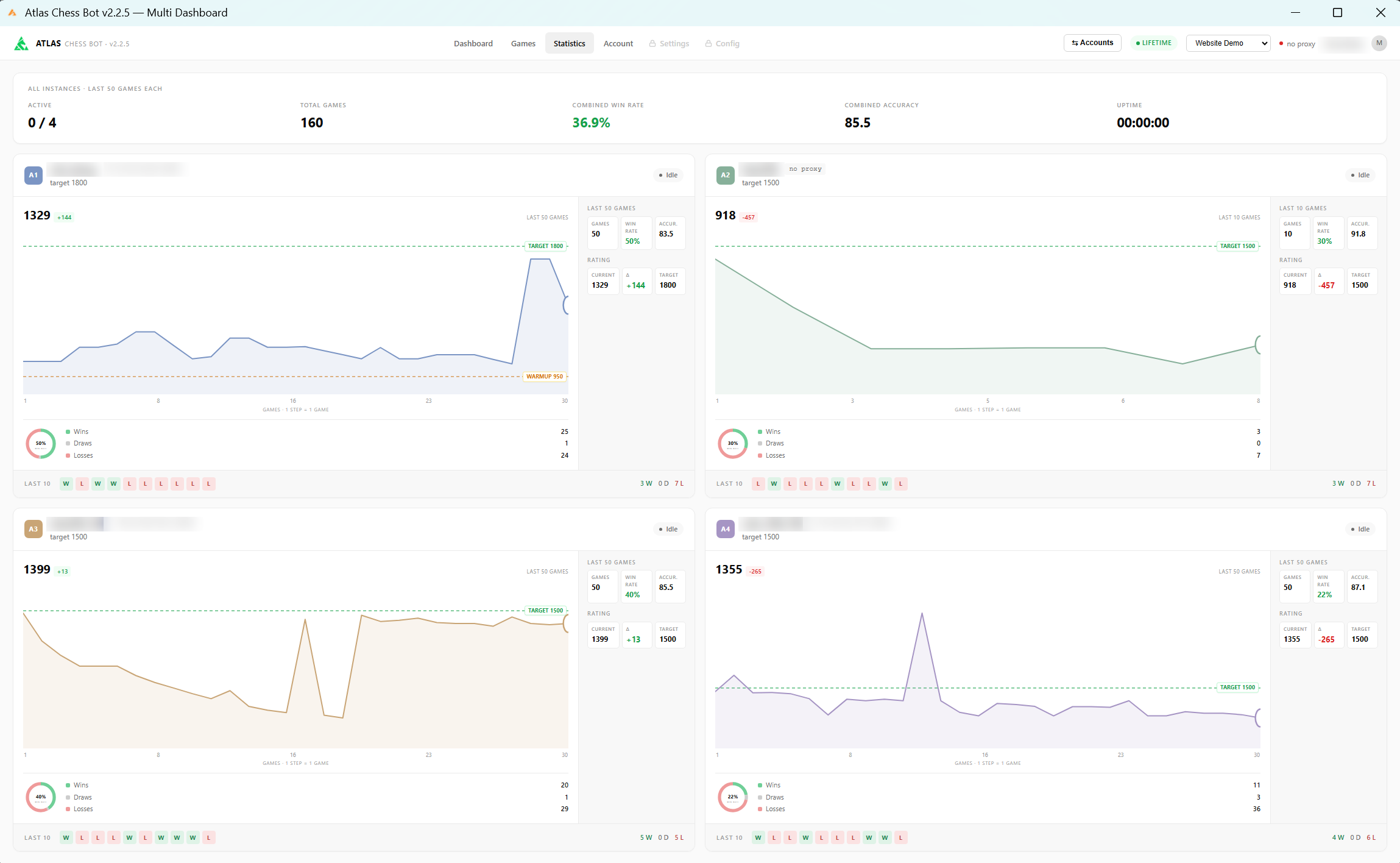
Every rating level has a realistic accuracy range. Club players miss tactics; that is what makes them club players. An account rated 1100 that suddenly plays several near-flawless games in a row is the loudest possible alarm. One great game is a great game. A streak of them, at a level where they should not exist, is a pattern. This is why raw move calculators are the most dangerous form of chess cheats: they produce exactly this fingerprint.
Signal 2: move timing
Humans have a rhythm that engines do not. We snap out forced recaptures, think long in sharp positions, and speed up in time trouble. Engine users tend to produce flat, even timing, or a suspicious tell: long thinks on obvious moves (waiting for the engine) and instant replies in positions that should take minutes. The clock tells a story, and the system reads it alongside the moves.
Signal 3: engine correlation
Analysts can measure how often your moves match top engine choices across many games. Every strong player matches sometimes; nobody legitimate matches almost always. Correlation across a body of games, not any single brilliant move, is what builds a case. This is also why "I only use it sometimes" degrades slower than "I follow it every move".
Signal 4: rating trajectory and reports
- Sudden climbs. Gaining hundreds of points in days invites review on its own, before anyone even opens your games.
- Opponent reports. Reports do not convict you, but they decide whose games get looked at first. Suspicious wins generate reports.
- Account behavior. Fresh accounts that immediately perform far above their level fit a known cheater profile and get less benefit of the doubt.
What happens when you get flagged
Usually nothing you can see. Accounts are typically reviewed silently and closed without warning; the first sign is a "closed for fair-play violations" notice and, in some cases, your rating losses refunded to opponents. There is an appeal process, but for engine-use bans it rarely goes anywhere. The account, its rating and its history are gone.
What this means if you use assistance
It means the engine is never the risk; the pattern is. Any tool that hands you perfect moves with no thought for accuracy curves, timing or rating pace is writing the evidence for your ban in real time. That is the exact problem Chesscheats was built around: engine strength shaped into human-looking play, with the patterns above managed by the software instead of left to you. Read our honest take in is Chesscheats safe to use, and our responsible use page. No tool makes the risk zero.
Play the odds, not against them
Plans start at €10.00. Download the Chesscheats desktop app and play your first game today.
View plans