 Chess
ChessGuide
Free chess cheats: what they actually cost you
You can get engine help for Chess.com without paying a cent. Stockfish is free, calculators are free, half of GitHub is free chess bots. So why does anyone pay? Because "free" tools bill you in a different currency: your account, your rating history, and sometimes your PC. Here is the honest math.
What the free options are
- Free move calculators. Paste your position into an analysis site, read the best move. Zero cost, full engine strength.
- Free browser extensions. Overlay arrows on the Chess.com board. Installed in one click from a web store or, worse, from a random zip file.
- Open-source bots. GitHub is full of auto-play scripts. Clone, run, grind.
- "Cracked" versions of paid tools. Uploaded by strangers, promising the product without the price.
Cost one: your account
Free tools hand you raw engine output and stop there. No timing model, no human-like move selection, no rating pace, none of the things that decide whether an account survives, as we break down in how Chess.com detects cheating. Playing live from a free calculator is the single fastest way to lose an account that exists. If the account is a throwaway, fine, that is a real use case. If it has your rating history, your friends and your streaks on it, "free" just quoted you its real price.
Cost two: your security
A browser extension with board access runs inside your Chess.com session. An unknown developer's extension can read what you can read and do what you can do, and extensions get sold and repurposed all the time. Cracked bots are worse: you are running an untrusted executable from someone whose stated business is helping people break rules. Some free tools are exactly what they claim. You have no way to know which ones.
Cost three: your time
Chess.com changes its site constantly, and every change silently breaks half the free tools. Free projects die the moment the developer gets bored; there is no support, no fixes, no one to care that it stopped working mid-game and torched your blitz rating on the way down. You will spend evenings finding a replacement, and the replacement inherits every problem above.
When free makes sense, and when it does not
Analyzing finished games? Free engines are perfect; that is what they are for, and it breaks no rules. Testing on an account you truly do not care about? Free is fine. But live assistance on an account you want to keep is a different job. That job is about surviving detection, and survival is precisely the feature free tools do not have. It is the entire reason paid chess cheats exist as a category.
Where Chesscheats fits
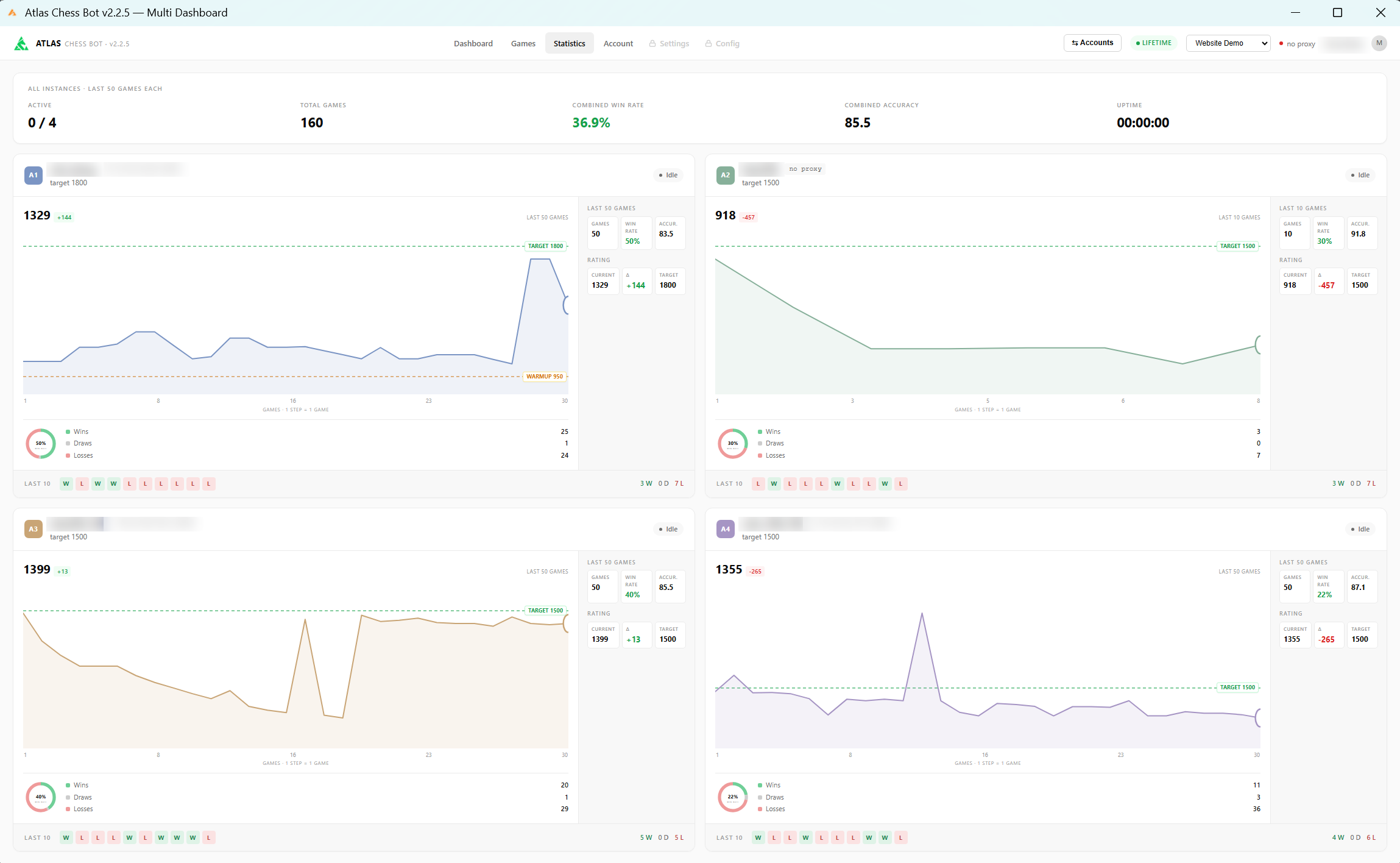
Chesscheats starts at €10.00 a month, and what the money buys is the part free tools skip: human-like play, anti-ban protection as the core design, real-time speed for blitz, and active maintenance when Chess.com changes. Compare options in the best chess cheat app guide, and read the honest risk picture in is Chesscheats safe. Whatever you use: responsibly, at your own risk, see responsible use.
Cheaper than a lost account
Plans start at €10.00. Download the Chesscheats desktop app and play your first game today.
View plans